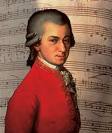
Thursday, May 26, 2011

Ludwig van Beethoven

Born: December 17, 1770 in Bonn, Germany
Died: March 26, 1827, Vienna, Austria
Nationality: German
Era: Classical
Main genre: Orchestral Music, Chamber Music, Vocal/ Choral Music, Opera
Main works: Orchestral Music:
9 Symphonies (including Symphony No. 5.)
Piano Concertos:
Overtures (including Coriolan and Leonore)
Chamber Music:
Piano Trios
Piano Sonatas ( including Moonlight and Waldstein)
String Trio
String Quintet
Sonatas for Piano and Violoncello
7 Bagatelles for Piano
Clarinet Trio
Horn Sonata
String Quartets (including Razumovsky)
Violin Sonatas
Vocal/Choral:
Songs and song cycle
Masses (including Missa Solemnis)
Cantatas (including Der glorreiche Augenblick)
Opera:
Fidelio
Brief biography:
Beethoven's father, Johannes, was a court Tenor and pianist and was the first person to instruct young Ludwig in music. He taught him the piano, violin, and also possibly the viola. He went to elementary school in the Neugasse until his first public performance at the age of 7, where his father, seeing the latent talent that his son possessed, sought out for him other teachers, more suited for his talent. The most notable of his teacher was Christian Gottlob Neefe, who was responsible for introducing young Ludwig to the music of Johann Sebastian Bach. By 1782, Beethoven was already assisting Neefe as deputy court organist in Bonn, and it was in the same year that his first work, a set of variations on a march theme by Dressler, was published. He then played viola in the Bonn symphony until he went to Vienna in 1787, with the idea of studying with Mozart. His plan for studying with Mozart was cut short though, by the sudden death of his mother, and thusly he being recalled back to Bonn to be at her bedside when she finally passed on. He returned to Vienna in 1792, to study with Haydn, (Mozart having died in 1791).

He was to remain in Vienna for the rest of his life, where he was to write his most remembered, and popular pieces, including Symphonies 4,5 and 9. He became well known at first, for his piano playing, having attained the level of virtuoso, and became well known among the aristocracy for his ability to improvise. By 1802, he was to have written 32 of his piano sonatas, and his first 2 symphonies, 18 string quartets, and his first 3 piano concertos. Sadly though, it was around this time, that the deafness, that he had noticed coming on 5-6 years previously, began to hit him even harder. This was a time of great despair for him, as is seen in the letters he wrote to his brothers in the "Heiligenstadt Testament", which were never sent, but were found among his possessions along with the "Immortal Beloved " letters, after his death. During this middle period of his life, he wrote symphonies 3-8,piano concertos 4 & 5, and his violin concerto, to name a few.

His involvement in the custody dispute of his nephew Karl, also slowed his musical output, and his production of music until around 1816 was almost stagnant. But the years following 1816 are arguably his most productive, with his 9th symphony, his final 7 piano sonatas, and a set of string quartets, which unlike their predecessors., have 6 and 7 movements, instead of the usual 4. He was able to complete these masterful creations, including the extended finale in the 9th symphony, Ode to Joy, while being almost completely deaf.. There is a story that circulates which says that at the finish of conduction the 9th, he just stood there facing the symphony, and not knowing that the crowd was applauding, because of his deafness, and his ability to hear the applause. He had to be turned around, to see the effect of his musical masterpiece upon the crowd. He continued to compose late into his life, until his death. He was buried with honors in Vienna, and his funeral was said to have been attended by more then 10,000 people, which shows the true following that his music created among the people who were blessed with being able to hear, enjoy and experience it.

Wolfgang Mozart Short Biography

Mozart was one of the most appreciated, prominent musical maestros ever happened to live.      
Musical genius Mozart was born on 27 January 1756 in Salzburg, Australia to Leopold Mozart
who was a business-minded composer, violinist and an assistant concertmaster at the Salzburg
court and Anna Maria Pertl. He was named Johannes Chrysostomus Wolfgangus Gottlieb
Mozart in honor of his grandfather (maternal) and a Saint Johannes Chrysostomus with whom
he shared his birth date.

Being born and brought up in a family where music was in air, in life, in dreams of everyone,
Mozart was highly attracted towards music. From his childhood, Wolffanfus learned and
developed immense interest in music. When he was just 5 years old, he started composing
small and beautiful melodious numbers. Looking at his children's musical talent, Mozart's father decided to use this
opportunity to present the talent of his children (Wolfgangus and elder daughter Maria Anna "Nannerl") in front of the
world. At the age of six years (in mid 1763), Mozart and his elder sister performed many concerts in European Courts (In
Paris and London); they also gave performance at major cities where they met connoisseur and lovers of music. They
also performed in front of the Bavarian elector, royal families and the Austrian empress. Wolfgangus and his sister played
piano and violin and were more than successful to tie their audiences to the chairs.

Soon, Wolfgangus wrote and published his first composition and when he was nine years old he started writing
symphonies. Demand for his music show started increasing so much that only nine months after coming back from his
tour in 1766, the Mozart family again set for yet another tour of Vienna. However, due to some problems Mozart could not
perform in an opera in Vienna.

After coming from the tour of Vienna, Wolfgangus tried to concentrate on improving and learning new skills in music, for
this he did not plan any tour till 1770. In next three years from 1770 to 1773, Mozart toured Italy three times and gave
many performances. While on tour of Italy, Mozart even wrote two of his famous operas 'Mitridate' and 'Lucio Silla'.
Mozart displayed his talent of music and astonished his audience when he adopted Italian style in his music. Mozart
further started his journey of music composition, he wrote set of string quartet, some symphonies. When Mozart was at
Salzburg during the period from 1774 to 1777, he worked as Konzertmeister (Concert Master) at the Prince Archbishop's
Court where he performed in some Piano and Violin concerts (about half a dozen piano sonatas), masses, symphonies
etc. During this period, he visited Munich once in 1775 for a premier of his Opera La Finta giardiniera.

Wolfgangus was very hungry to attain a very high position in the world of music, he knew that staying in Salzburg it was
never possible to achieve what he wanted, in 1777 Mozart left Salzburg with his mother and set for Munich and
Mannheim. There he tried his best to find a good post for himself but was never offered one, he then moved to Paris in
search of the same. In Paris, Anna Maria (Wolfgangus's mother) died and Wolfgangus became very lonely, here also
Wolfgangus could not get any suitable post for himself. After Wolfgangus's all the unsuccessful trials, Leopold called him
back to Salzburg, where he had made an arranged a high level post for his son. For next two years, Wolfgangus, worked
at Court and played concerts at Court and Cathedral. He actively participated in concerts, serenades and gave music to
dramas. He also continued composing and creating symphonies. In 1780 he received his most awaited opportunity to
perform in an opera at Munich.

Along with many concerts, operas and music composition for dramas, Mozart also wrote beautiful music compositions,
which have become masterpiece of his artwork. Mozart further was sent to the court at Vienna where he was not allowed
to work at the post he wanted the most, he finally gave up trying to perform at the court in Vienna and got out of the job
around 1781. After that, Mozart got many golden opportunities to make fortune when he created music while he was not
at any post. Soon, Mozart started going in public, he played music in public functions, published his work and also started
teaching music. Further in 1787, Mozart was offered a minor court post as Kammermusicus, where he wrote dance music
for court balls. In year 1782, Mozart married Constanze Weber (younger sister of Aloysia Weber, who was his former
lover).

Mozart had gained a reasonable popularity by publishing some beautiful sonatas (for violin and piano), music
compositions, by performing in concerts and Operas like 'Die Entfuhrun aus dem Serail' (in 1782, and was one of his most
successful operas with many songs in it. NOTE: Mozart wrote serious as well as comic operas (he wrote three comic
operas in his life), he also wrote some quartets, which he had dedicated to his Haydn who appreciated Mozart for his
knowledge of music and talent to compose. Mozart had also gained popularity by managing concerts on his own, without
any assistance he not only composed music for the concert but he also managed the orchestra. Mozart earned enough to
live a comfortable life, but because of his improper management of money and expenses, he was never able to save
money for future and always had to borrow from others when was in need of money.

Mozart spent rest of his life in Vienna; during this period he also visited various places such as Salzburg, Berlin etc. to
perform in operas, dramas and concerts. Mozart died on 5 December 1791 in Vienna. (There are different stories
regarding the death of musical genius, according to one story he died of the feverish illness (Rheumatic Fever) and
according to another he died of poisoning).

Mozart composed hundreds of beautiful and unique music works which include over 20 operas, about 14-15 Masses, about 30-40 concerts (piano and violin), about 50-60 symphonies, about 20 sonata etc. Even after his death, Mozart remained and will remain one of the most favorite musicians for millions of his fans.

Influence of Mozart's compositions on Beethoven

That Mozart's work continued to influence Beethoven is an uncontroversial claim. To give one example, the role played by Mozart's 40th Symphony in the composition of Beethoven's Fifth can be documented from Beethoven's sketchbooks, where Beethoven copied out a sequence from Mozart's work that he adapted into his own symphony; see Symphony No. 5 (Beethoven). It is also believed that some of Beethoven's works have direct models in comparable works by Mozart; for example Charles Rosen sees Mozart's C minor piano concerto K. 491 as a model for Beethoven's Third Concerto in the same key[7], the Quintet for Piano and Winds K. 452 for Beethoven's comparable work Op. 16,[8] and the A major String Quartet K. 464 for Beethoven's A major quartet Op. 18 No. 5.[8] Robert Marshall sees Mozart's C minor piano sonata Piano Sonata No. 14 in C minor, K. 457 as the model for Beethoven's Pathétique sonata Op. 13, in the same key.[9]

Beethoven also wrote cadenzas (WoO 58) to the first and third movements of Mozart's D minor piano concerto, K. 466, as well as four sets of variations on Mozart's themes:

Did the two ever meet ?


                         Although the exact dates are uncertain, it is known that Beethoven arrived in Vienna in January 1787 and departed in March or April, remaining in the city for up to 10 and a half weeks. As Mozart was in Prague for part of this time, there is a total period of about six weeks when the two composers could have met.[1] Beethoven's return to Bonn was prompted at least in part by his mother's medical condition (she was dying of tuberculosis, passing away in July of that year[2]). He also had a nearly-incapacitated alcoholic father and two younger brothers, so it is understandable that he would have felt obliged to go home to help keep his family together. The written documentation for the facts of Beethoven's visit is thin.

As far as what happened during the visit, there are various views.

The 19th century biographer Otto Jahn gives the following anecdote:
Beethoven made his appearance in Vienna as a youthful musician of promise in the spring of 1787, but was only able to remain there a short time; he was introduced to Mozart, and played to him at his request. Mozart, considering the piece he performed to be a studied show-piece, was somewhat cold in his expressions of admiration. Beethoven, noticing this, begged for a theme for improvisation, and, inspired by the presence of the master he revered so highly, played in such a manner as gradually to engross Mozart's whole attention; turning quietly to the bystanders, he said emphatically, "Mark that young man; he will make himself a name in the world!"[3]

Unfortunately, Jahn does not say where he got this from, mentioning only that "it was communicated to me in Vienna on good authority." No corroboration of the story from any contemporary document (for example, a letter of Beethoven's or Mozart's, or a reminiscence of any of Beethoven's contemporaries) supports the story.

Perhaps as a result, contemporary scholarship seems reluctant to propagate Jahn's story. The authoritative Grove Dictionary of Music and Musicians does not mention it; its account of the visit is as follows:
In the spring of 1787 Beethoven visited Vienna. In the absence of documents much remains uncertain about the precise aims of the journey and the extent to which they were realized; but there seems little doubt that he met Mozart and perhaps had a few lessons from him.[4]

Maynard Solomon, who has written closely-researched biographies of both Mozart and Beethoven, likewise does not mention Jahn's tale. Instead he offers a rather harsh possibility, that Mozart might have given Beethoven an audition and then rejected him:
In Bonn Beethoven was being groomed to be Mozart's successor by [a group of influential nobles], who sent him to Vienna ... to advance that purpose. The sixteen-year-old Beethoven, however, was not yet ready to be on his own. At his father's urging, the young virtuoso left Vienna...and returned home in a state of despondency over his mother's consumptive condition--and perhaps over a rejection by Mozart, who was preoccupied with his own affairs, including his worrisome financial condition, and may not have been able seriously to consider taking on another pupil, even one of great talent and backed by eminent patrons.

Drawing of Mozart in silverpoint, made by Doris Stock in April 1789

Solomon goes on to enumerate other matters that were keeping Mozart preoccupied at the time: his father's declining health, a visit to Prague, the beginnings of work on Don Giovanni, and the writing of "a vast amount of other music." Moreover, Mozart at the time already had a pupil living in his home, the nine-year-old Johann Nepomuk Hummel. Lastly, he notes that Beethoven eventually returned to Vienna, but only in 1792 – a year after Mozart's death.

A hypothesis that is apparently compatible with all the documentary evidence (other than Jahn's unsourced report) is that Mozart and Beethoven simply never met.[5]

Regardless of which of these hypotheses is true, it seems that the first Vienna visit was the start of an unhappy time for Beethoven. The Grove Dictionary notes:
[Beethoven's] first surviving letter, to a member of a family in Augsburg that had befriended him on his way [to Vienna], describes the melancholy events of that summer and hints at ... ill-health [and] depression.[6]

Life and Music of Mozart

     Of all the classical composers who hold a special place in music history, Wolfgang Amadeus Mozart is perhaps the most famous, and certainly one of the most accomplished. Today, his compositions have taken a firm hold in the world of classical music, and his pieces are often heard throughout concerts in the world. Although Mozart died at the young age of 35, he left behind a legacy of works that are now regarded as masterpieces. However, his accomplishments were not just the work of a musical genius; Mozart worked and studied hard throughout his lifetime, putting his heart and soul into the music he composed. It is for these reasons that Mozart is perhaps the most respected classical composer in history.

Mozart was born in Salzburg, Austria on January 27, 1756. His father, a skilled violinist and music teacher himself, encouraged his young son to play many instruments from the tender age of three; instruments ranging from the violin to the organ and beyond. By the age of five, Mozart had started composing music for himself.

As a young man, Mozart travelled extensively throughout Europe, with his time spent in Vienna in the early 1770s being particularly rewarding; it was here that he composed two operas, ‘Mitridate’ and ‘Lucio Silla’. Later during this decade, Mozart’s first operas began to be performed in Germany, and he found employment from 1774 to 1777 at the court of the Prince Archbishop in his hometown of Salzburg. During this period, the classical composer completed his complete violin concertos, along with various symphonies and masses, and six piano sonatas amongst other pieces.

The next few years saw Mozart searching for further success as a classical composer, his travels taking him from Paris to Munich and back to Vienna. Mozart supplemented his music-composing income by teaching and playing either privately or in public. The composer married Constanze Weber in 1782 and decided to devote his time to writing piano concertos; he had created fifteen by the end of 1786.

The year 1786 saw Mozart team up with respected librettist Lorenzo da Ponte for the comic operas that were to become his most famous works; these included ‘The Marriage of Figaro’ and ‘Don Giovanni’. However, these years also saw a substantial decline in health for the classical composer, and he died on December 5th, 1791. The attendant physician recorded Mozart’s death as fever, a somewhat vague notion that led to widespread speculation as to the real cause behind the composer’s demise; some attributed it to rheumatic fever, whilst others believed (and some still do believe) that Mozart had been poisoned.

Mozart’s status as an innovative classical composer stems from his ceaseless exploration and experimentation with musical genres. He developed his style throughout his lifetime and did not simply stick to the major trends of the Baroque period; in particular, he made the piano concerto his own, bringing it to popularity through sheer hard work. Mozart’s music can best be described as containing natural order and balance (a typical by-product of his Enlightenment, or rational, beliefs), and having a focus on harmony and uncomplicated-yet-unforgettable melody. His later works concentrate on expressing human emotion and psychology through music and to this end, he developed a degree of subtlety rarely found in any classical composer.

Indeed, Mozart’s eventful life and fortunes – the subject of much debate amongst scholars and researchers – and the sheer amount of compositions he left behind have given the classical composer something of a legendary status. Today, he is more popular than ever, often ranked alongside Beethoven and Bach as one of the three top composers of all time.Johannes Chrysostomus Wolfgangus Theophilus Mozart or Wolfgang Amadeus Mozart
Born 250 years ago, 6 years after Bach's death 14 year before Beethoven's birth.
(Some favorite pieces:
Operas: Don Giovanni (Donna Anna's aria and Don Giovanni's death are the best parts according to mozart.biz),
Marriage of Figaro, Escape from Seraglio, Cosi Fan Tutte, Magic Flute
Concertos (27 for piano, 5 or 6 for violin, 2 for flute, one for clarinet..):
20th piano concerto, 5th Violin concerto (turkish), Flute & harp concerto
Piano sonatas K310 K457, All Turca-Turkish March of K331 sonata ,..
Symphonies 40 41 (Jupiter, last movement is good) 39 38 (Prague) 25 26 31 (Paris)
Some people including Karajan, Mozart himself like 35th also.
Great Mass, Requiem, Coronation.. Chamber Music K478 K526
Light music: A little night music (Eine Kleine Nacht Musik); among many others.)


Have you heard of young genius pianist Fazil Say (who also has many compositions). If you are a musician
probably your answer would be yes. He is a very active musician who plays at hundreds of concerts and recitals
every year year. Because of Mozart year, you can hear him play Mozart's music quite often. Go to his concerts
and buy his CD's.

Check out famous violinist Anne Sophie Mutter's Mozart page
Offical Austrian Mozart site: www.mozart.at

This year 2009 is 253rd birth year of Wolfgang Amadeus Mozart.
Wikipedia page about Mozart
Biography by Mozart project
You may see a more professional looking site at this adress one day.
When editing this page I saw Mozart Composer as title. I don't really remember adding
the word Composer in page title. It was indeed the editor's name.

Visit long short term rentals in us, canada for accommodation.

Monday, May 16, 2011

THE SPECIAL COMPOSER

Ludwig Van Beethoven is a German composer who slowly became deaf.Beethoven worked very hard to overcome this problem.He went on to create exciting music even after he went deaf.

Monday, May 9, 2011

Guru Yang Mengajar Muzik Di S.K Pakatan Jaya

                                                                              Cikgu Faizal 
                                                                      (Ketua Panitia Muzik)

                                                                                Cikgu Rizal                                                                                                                                                                                                                                                                                                                                                                                                                                                  
                                                                                         Cikgu Hasnatun
                                                                                   Cikgu Norazizah